AM-002 · PORTFOLIO / DETAIL DRAWINGS SCALE NTS · REV 05 · JUN 2026

Projects

Formula Student, workshop and coursework projects, each one a problem with real constraints: packaging, material supply, rules envelopes, machine time.

0.0 · DRAWING REGISTER
NO.TITLETEAM / CONTEXTFOCUSSTATUS
DWG-01EV front uprightOxford Brookes RacingPackaging · FEA · GD&TIN PROGRESS
DWG-02Carbon steering columnOxford Brookes RacingDFM · DFA · rules envelopeRACED
DWG-03Suspension clevisGlobal Formula RacingValidation · manufactureRACED
DWG-04Manufacturing & toolingGFR & OBRFixtures · welding · metrologyONGOING
DWG-05Instrumentation courseworkOxford Brookes UniversityStrain · DAQ · thermodynamicsCOMPLETE
DWG-06Process automationTualatin Valley BlueberriesExcel · Power AutomateCOMPLETE
DWG-01

EV front upright

OXFORD BROOKES RACING
2025–26

CHALLENGE

The hub motor, planetary gearbox, brake caliper and temperature/pressure sensors take up most of the space in the wheel, so the upright can't be treated as an individual suspension component. It has to hold suspension geometry and low compliance while wrapping around a fixed powertrain, and still come off a 5-axis machine.

ENGINEERING WORK

  • Defined geometry around the packaging envelope set by the hub motor, gearbox and brake package.
  • Iterated between FEA and geometry updates to balance stiffness targets against the available space.
  • Applied GD&T and tolerance stack-up analysis for reliable fitment within the corner assembly.
  • Produced BS8888 manufacturing drawings and design output for CNC manufacture.

KEY LEARNING

Packaging decisions aren't secondary, early envelope choices shaped the structure and the machining more than any later local feature did.

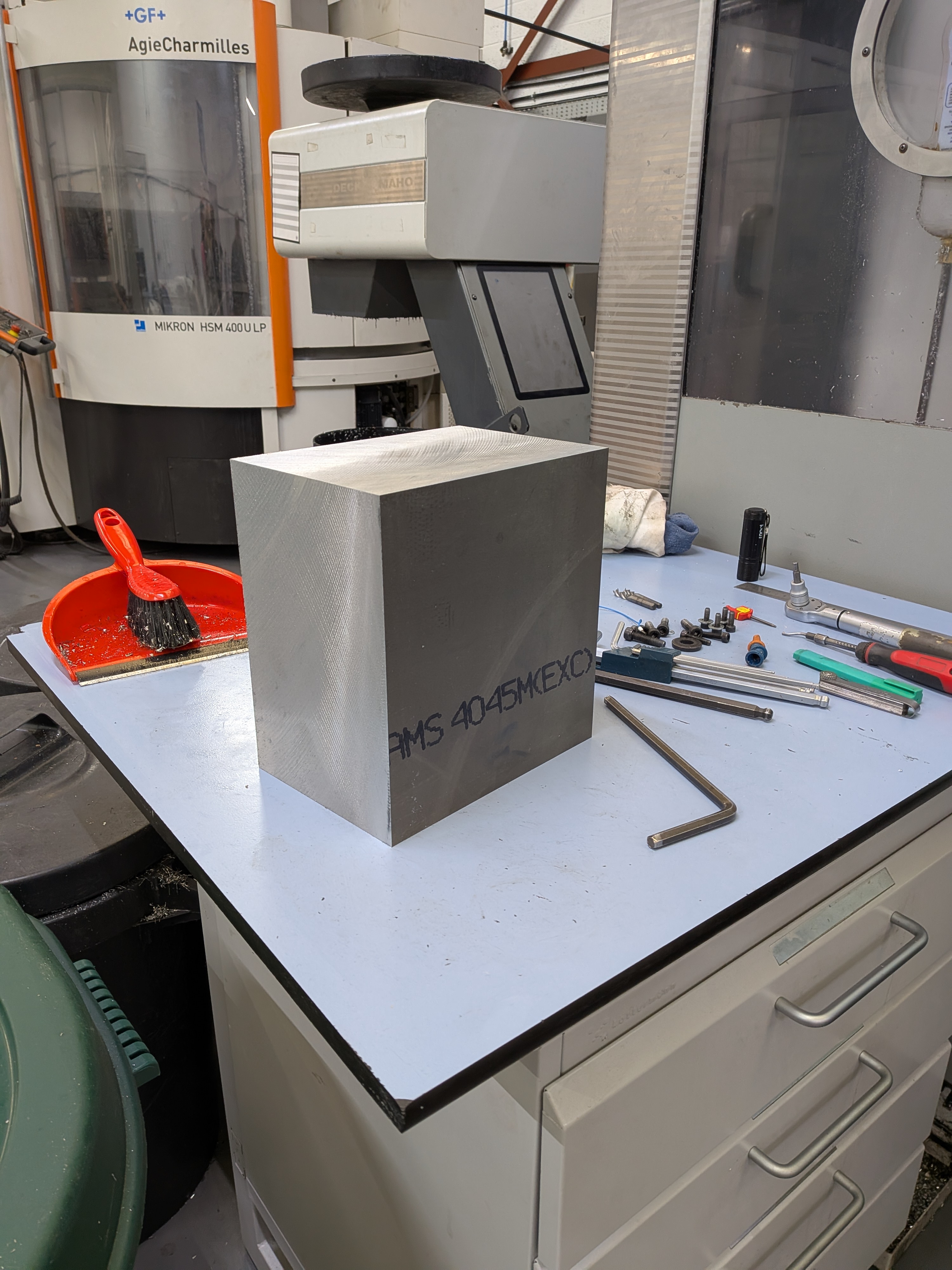
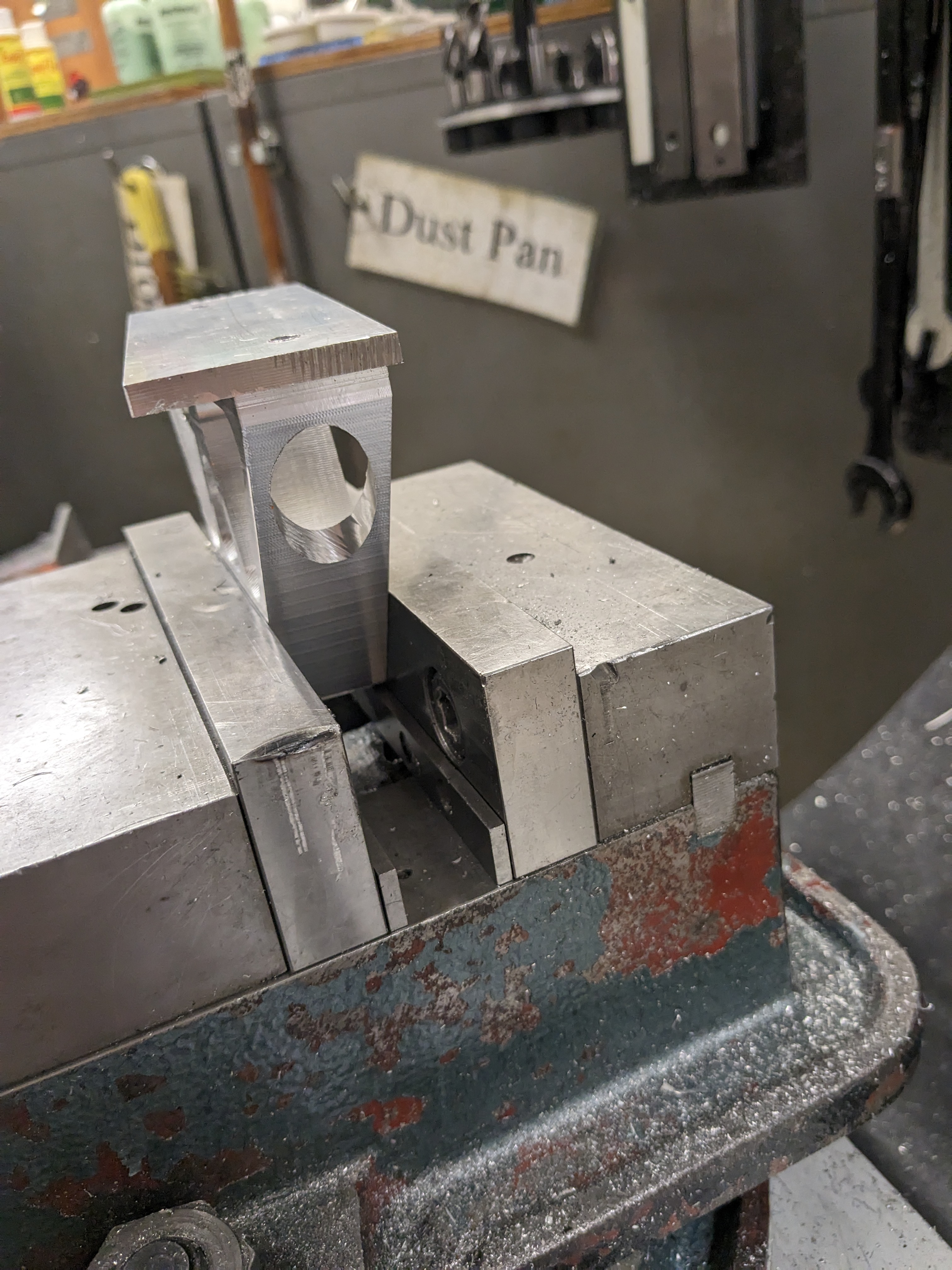
Upright billet stock fixtured in the CNC
FIG. 02 · BILLET STOCK
Machined front upright component
FIG. 03 · MACHINED COMPONENT
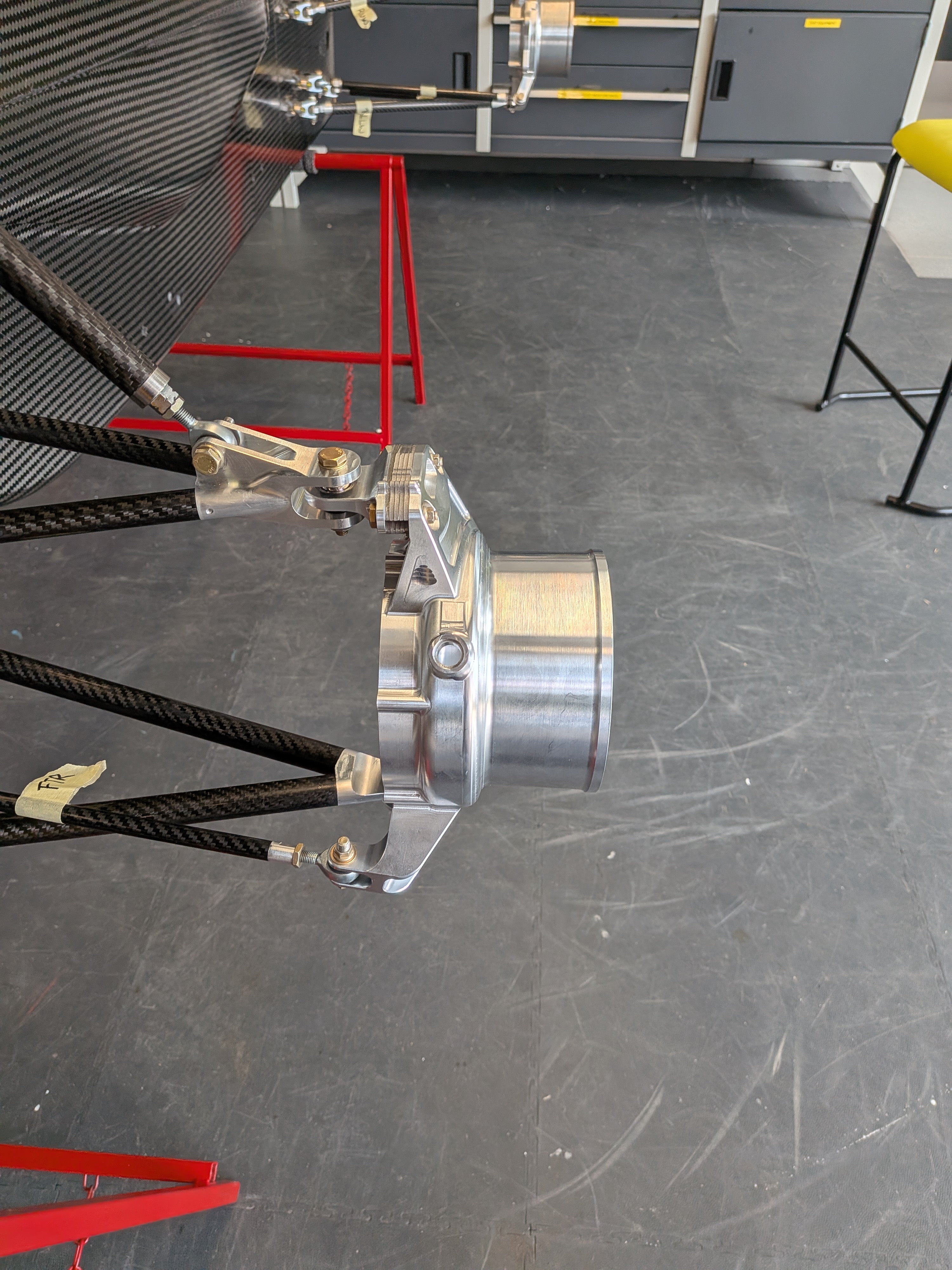
Front corner assembly with hub motor installed on carbon wishbones
FIG. 04 · FRONT CORNER ASSEMBLY, HUB MOTOR INSTALLED ON CARBON WISHBONES
DWG-02

Carbon fibre steering column & bushing housing

OXFORD BROOKES RACING
2024–25

CHALLENGE

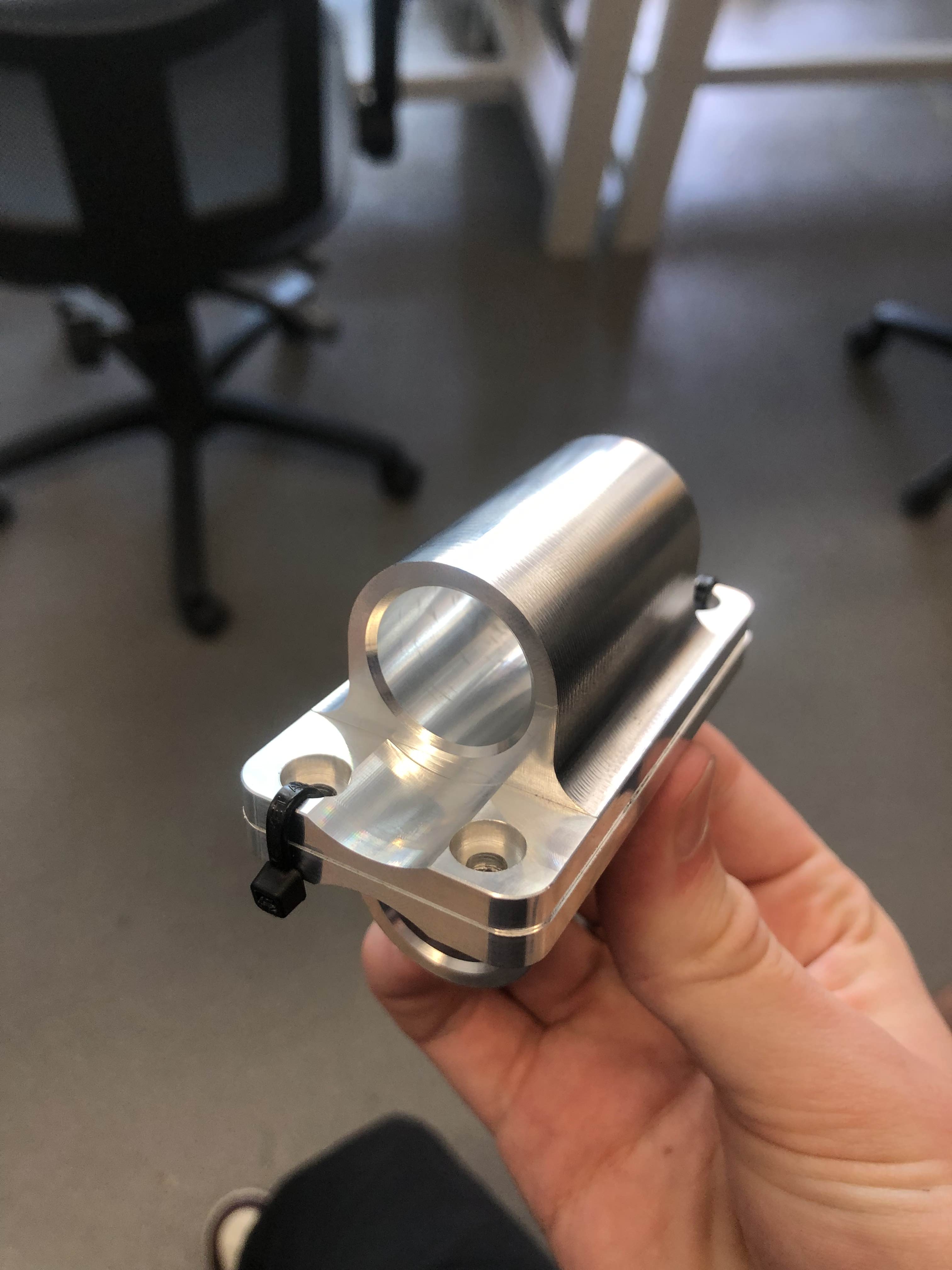
Replace a steel steering column mount with a carbon fibre structure and aluminium bushing housing. The Formula Student rules template imposed a strict geometric envelope inside the chassis. That constraint, not idealised geometry, drove the design.

ENGINEERING WORK

  • Worked with the composites sub-team to confirm ply-layup feasibility and manufacturing constraints.
  • Modelled tooling placeholders, checked tool access and machining sequence for the aluminium housing.
  • Ran interference and clearance checks so the steering system could be assembled and serviced.
  • Produced BS8888-compliant drawings for manufacture.

KEY LEARNING

Rules envelopes and clearance checks belong at the start of a design, not as a sign-off step, recognising the limits early made every later decision cheaper.

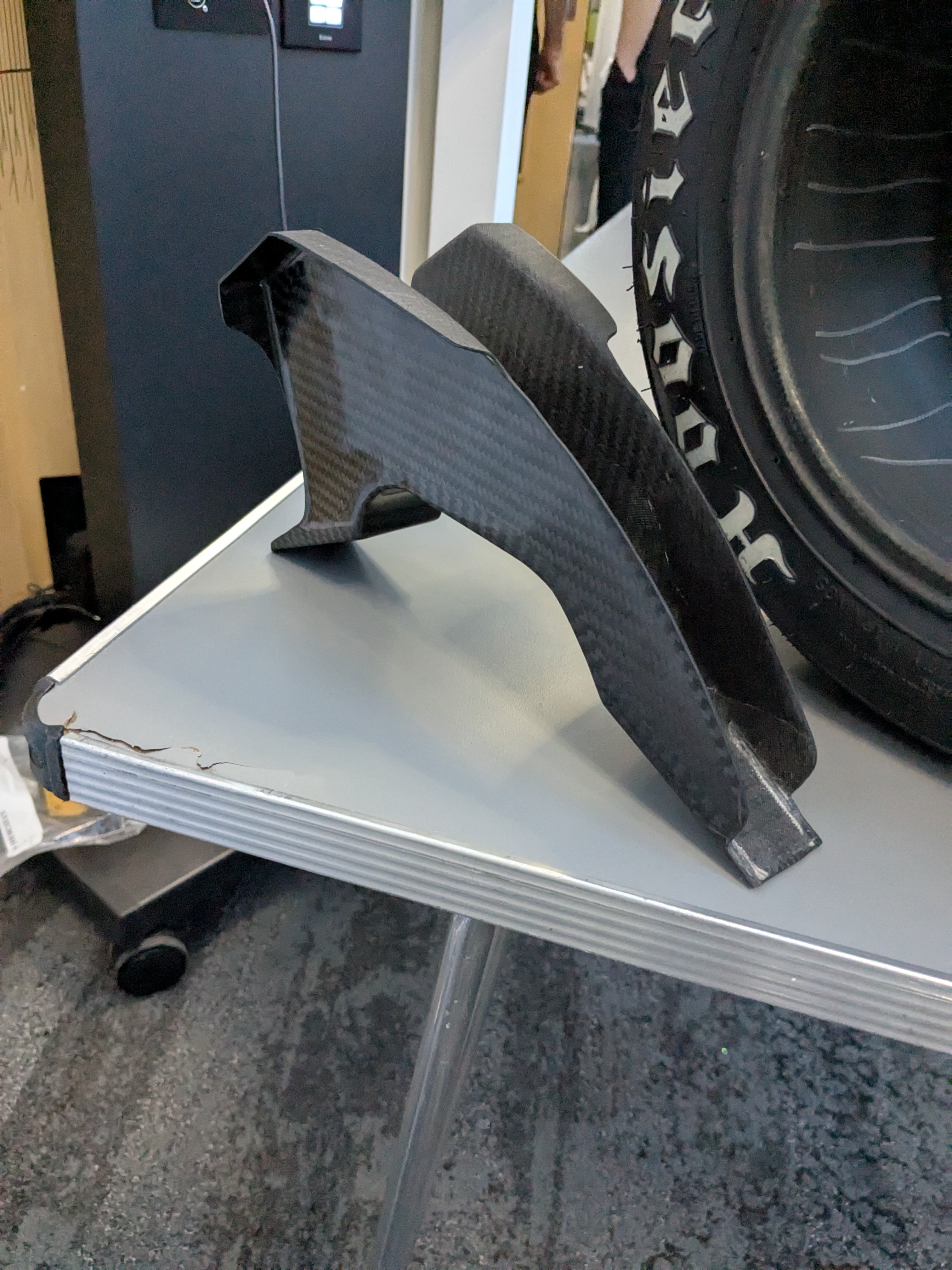
Carbon fibre steering column and machined components
FIG. 05 · CARBON COLUMN AND MACHINED COMPONENTS
Machined aluminium bushing housing
FIG. 06 · ALUMINIUM BUSHING HOUSING, MACHINED
DWG-03

Suspension clevis redesign & validation

GLOBAL FORMULA RACING
2022–23

CHALLENGE

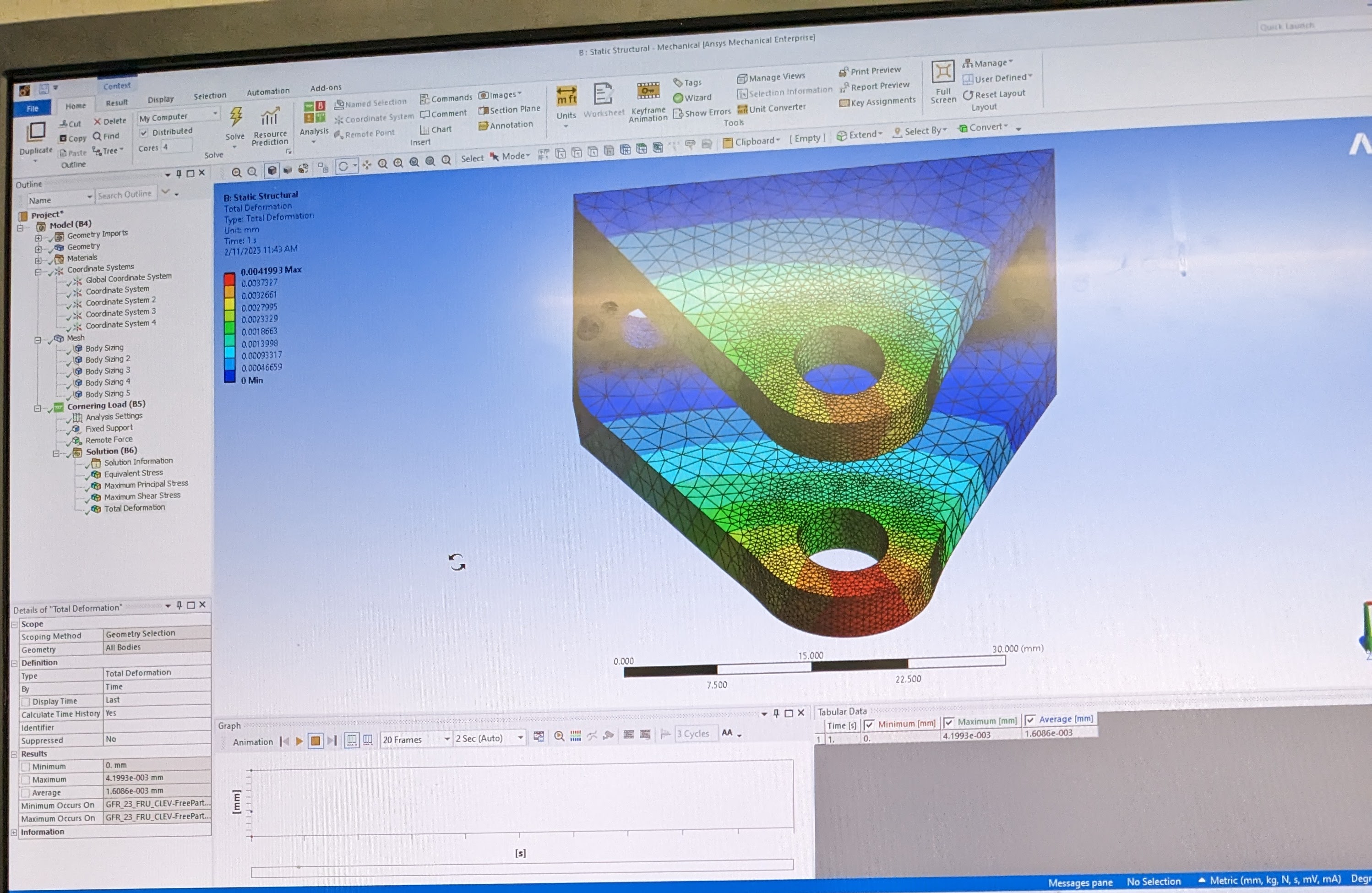
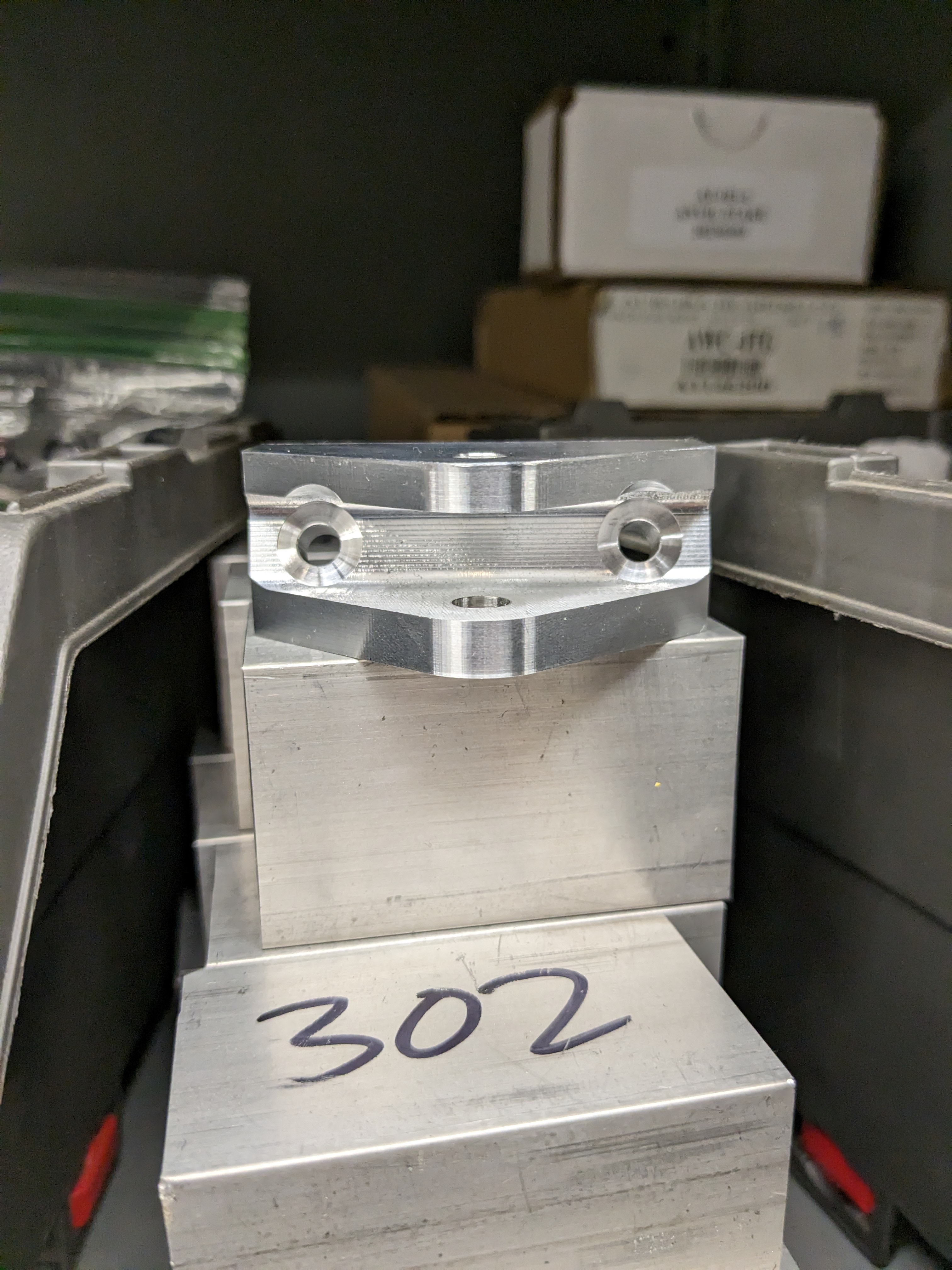
The 7075-T6 stock was needed elsewhere, so the clevises had to be reworked for 6061-T6 mid-build. A weaker material means larger sections, which means more unsprung mass. The trade wasn't "make it stronger" but "find the acceptable balance" without derailing the schedule.

ENGINEERING WORK

  • Excel hand calculations to establish baseline geometry and cross-check the analysis.
  • Ansys static structural to verify a minimum safety factor of 2.0 on yield.
  • Accepted a controlled mass increase rather than preserve a lighter, riskier geometry.
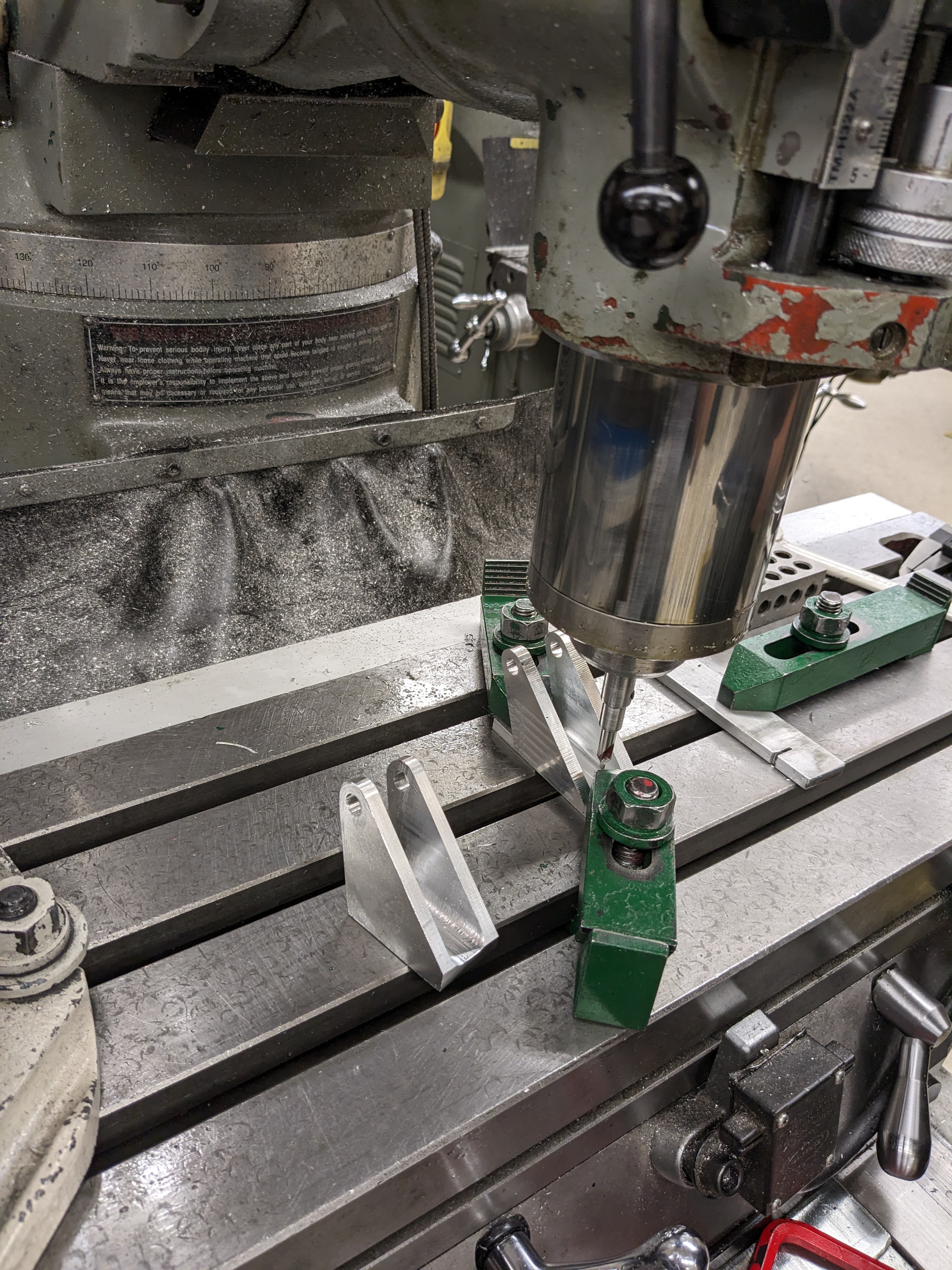
  • Machined in-house on a 3-axis mill, with fixturing and operation sequencing planned beforehand.
  • Verified critical dimensions with micrometers, calipers, dial indicators and bore gauges.

KEY LEARNING

A material change is never a local substitution: it affects section sizing, mass and validation. Treat it as a large design change..

Ansys static structural result for the clevis
FIG. 07 · ANSYS STATIC STRUCTURAL, LOAD PATH
Machined 6061-T6 clevis
FIG. 08 · MACHINED 6061-T6 COMPONENT
Global Formula Racing competition vehicle
FIG. 09 · GFR COMPETITION VEHICLE
DWG-04

Manufacturing & tooling

GFR & OXFORD BROOKES RACING
2022–PRESENT

REPRESENTATIVE WORK

  • Custom sensor brackets for potentiometers and load cells.
  • Press tooling for suspension bushings and gearbox bearings.
  • Dimensional verification with micrometers, calipers, dial indicators, bore gauges and gauge blocks.
  • DFM input on CNC shop quotes, reviewing for cost and complexity reduction.

WHY IT MATTERS

Machining and inspecting parts myself is what makes it obvious when a nominally correct CAD model will still be awkward to fixture, inspect or assemble.

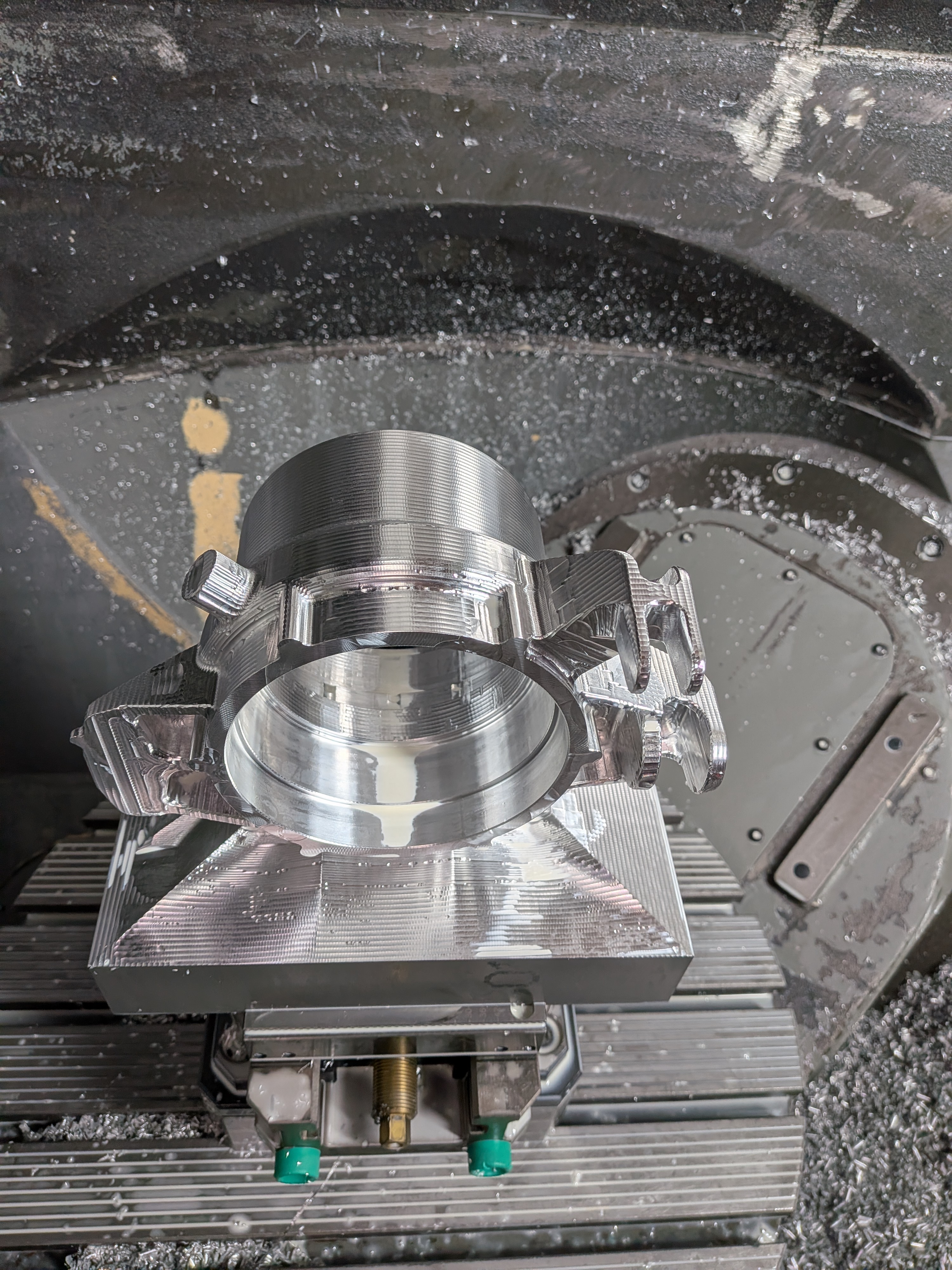
5-axis machining of the upright billet
FIG. 10 · 5-AXIS MACHINING, UPRIGHT (Designed In-House, Manufactured by Sponsor)
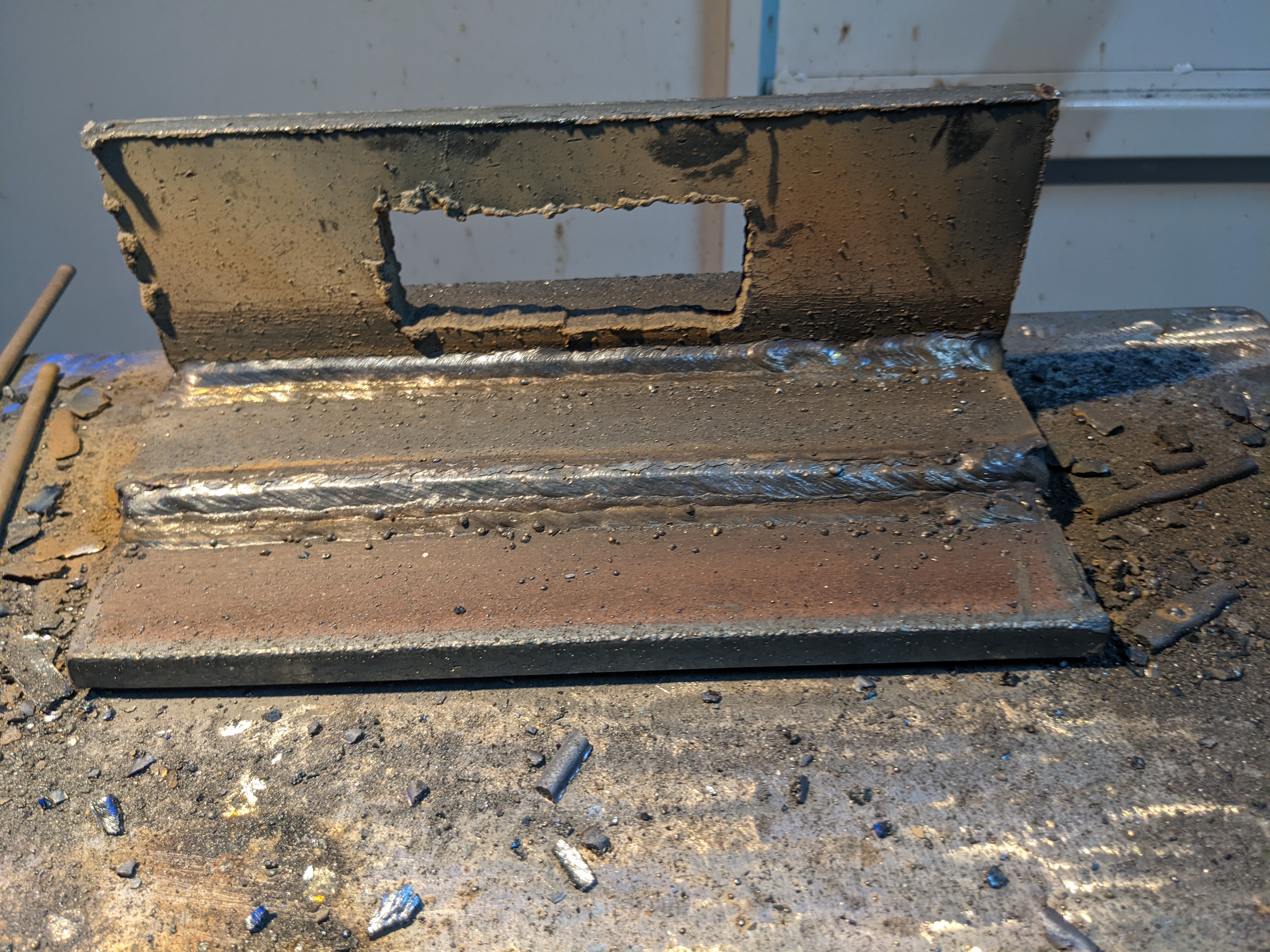
Structural welding practice, steel tee joints
FIG. 11 · STRUCTURAL WELDING, GMAW/SMAW
DWG-05

Instrumentation & coursework

OXFORD BROOKES UNIVERSITY
2024–PRESENT

REPRESENTATIVE WORK

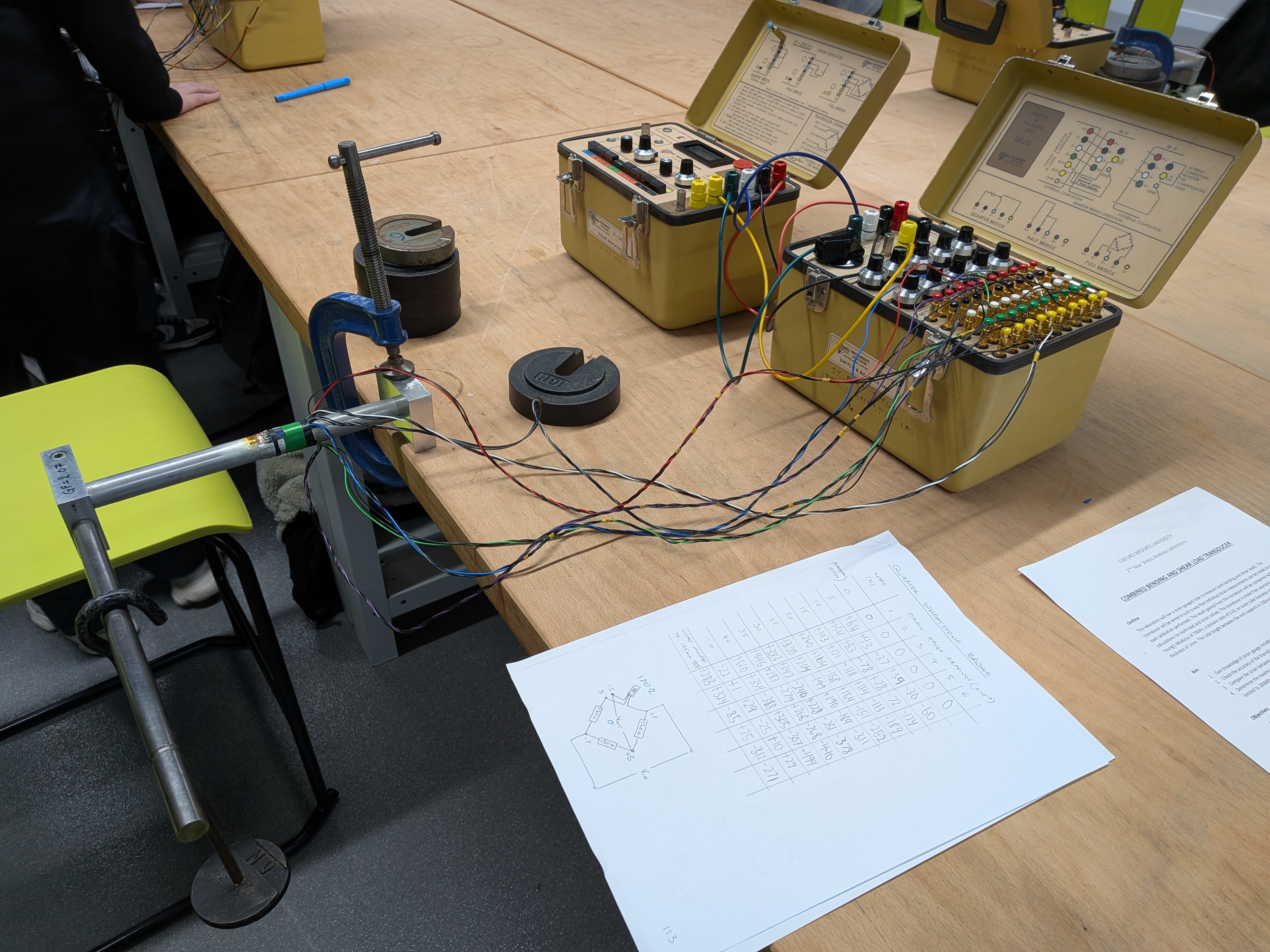
  • Measured strain in a loaded beam with a quarter Wheatstone bridge, with data acquisition and calibration against known loads.
  • Assembled and demonstrated an alpha-type Stirling engine, connecting build quality to thermodynamic cycle behaviour.

WHY IT MATTERS

The lab work backs up the vehicle work: measurement fundamentals, mechanics of materials, and comfort with both experimental setup and hands-on assembly.

Quarter Wheatstone bridge strain gauge setup on a beam
FIG. 12 · QUARTER-BRIDGE STRAIN GAUGE SETUP
DWG-06

Operational process automation

TUALATIN VALLEY BLUEBERRIES
2025

PROBLEM

Manual handling of harvest data risked errors at a point where delays meant spoilage. Reliability mattered more than speed.

IMPLEMENTATION

  • Automated the data handling between the ERP system and Excel tracking with Power Automate and Power Query.
  • Cut manual translation errors and freed time for higher-value work during harvest.

WHY IT'S HERE

Not an engineering part, but the same habits: find the failure points, simplify the process, validate the result.